
Shame is Spooky!

Last Saturday at the dog park, my amiable black lab Olive ran away from the playgroup towards the open field and started barking fiercely. She barked and barked with all her might - she was so upset! She was spooked by something, but when I went to investigate, I couldn’t see anything there. Maybe Olive can see ghosts…or at least, she sensed something that felt really wrong to her. It took her a while to settle down again and get back to her sweet-tempered self.
Shame is spooky like that too. Something happens and we feel bad - sometimes really bad. Others can’t always see what made us upset. But we react anyway. Ghouls and goblins of our past can rise up and scare us when we least expect it. The trick is to see them without getting spooked and then, to make friends with them! Or at least to not run away from ourselves.
Let’s do a little experiment to bring this closer to home. Imagine a recent time when you felt embarrassed or offended. It might have been something you did that caused a little (or a lot) of shame, or something that someone else did that made you feel angry or offended. Do you have it in mind? Take your time, I’ll wait…
Okay, once you have a situation in mind (and if you’re stumped, just think of the last time someone or something annoyed you) - begin to replay the scene, including what you said to yourself, until you start to feel some reaction in your body. Once that starts to happen, just focus on what happens in your body for a few moments. What are you feeling and where? It might be something like a subtle tightness in your chest or belly, or a furrow in your brow. Follow that physical feeling to an emotional feeling that is underneath. And that, my friends, is your “shame goblin.” I’ll tell you what to do with it in a minute (and the answer is not to spray it with a proton pack or trap it with a ghost net!)
First, I want to give you a trick to figure out what to do about these shame goblins. Notice: is there shame, blame, or are you trying to explain something to yourself? If so, then below that, there is pain. Here’s the equation: Shame/Blame/Explain = Pain underneath. That’s the shortcut. And then, you spend time with that pain, compassionately.
I’ll share something that happened to me recently that caused me to feel some shame. I had texted a friend to ask for some emotional support over a stressful situation I was in. When I didn’t get any response for a while, I started to get annoyed! Then I started to make up a story about why they hadn’t answered yet. It was not flattering - to them or to me. When I slowed down enough to pay attention to what was going on beneath my blame and criticism, I could notice that I was feeling some pain of not feeling heard. And also, some shame of maybe being “too needy” because I was reaching out for emotional support. You sense the old story in there? The ghosts of some shame-laden belief about being too needy for having strong feelings? If so, you are on your way to becoming a shame-ghost buster!
If you want to take this a step further, you can begin to be curious about your “Personal Shame Antecedents” (my own term; feel free to steal it). What sets you off? What gets you into negative thoughts and feelings? Pay attention to the cues and to the internal dialogue that happens - that critical voice inside that is shaming and blaming either someone else or ourselves. Sometimes we don’t even notice that we are being mean to ourselves, we are so used to it! Common PSA’s include:
Comparing ourselves to others
Recalling an old memory that caused shame
Consuming too much social media (a variation on the comparison PSA)
Being tired, hungry, angry, lonely
Having strong feelings
Behaving outside of our comfort zone/emotional window of tolerance
In my mini-shame episode I shared with you, I didn’t even realize how negative my story was about why I wasn’t being responded to…until I slowed down enough to notice. And then, I felt some shame for being so judgmental of people I love, and of myself for having strong feelings!
So, we are not going to judge “the judger” inside. Instead, we are going to take a few deep breaths and *sigh* them out (a great nervous system regulating activity, that sighing!). Then we are going to notice our feelings of shame/blame/explain (I was feeling annoyed, and telling myself a story that was based on very old experiences, from childhood actually). And then we are going to ask ourselves, "What is the pain underneath?” And then we see that shame and pain and we love it. We offer compassion to it. We try not to judge it. We want an embodied contact with that old implicit memory and the old beliefs and painful feelings attached.
And for bonus points, we try a disconfirming experience. This concept is from relational neuroscience, which teaches us that we can change our association with an old experience and unhook from the beliefs that are in there by having a new, preferably relational, experience. So, instead of me reinforcing the very old belief that “I am a needy person for having strong feelings” I can instead have compassion for my feelings (which is an internal reparative relationship) and notice that I did, in fact, receive affirming responses from my friends their own words and in their own time. And I can honor my feelings and my need for connection without shame. I can deliberately craft a new narrative: “My strong feelings are a valuable part of who I am, and are deserving of care and attention.” Feelings are worthy of love instead of shame!
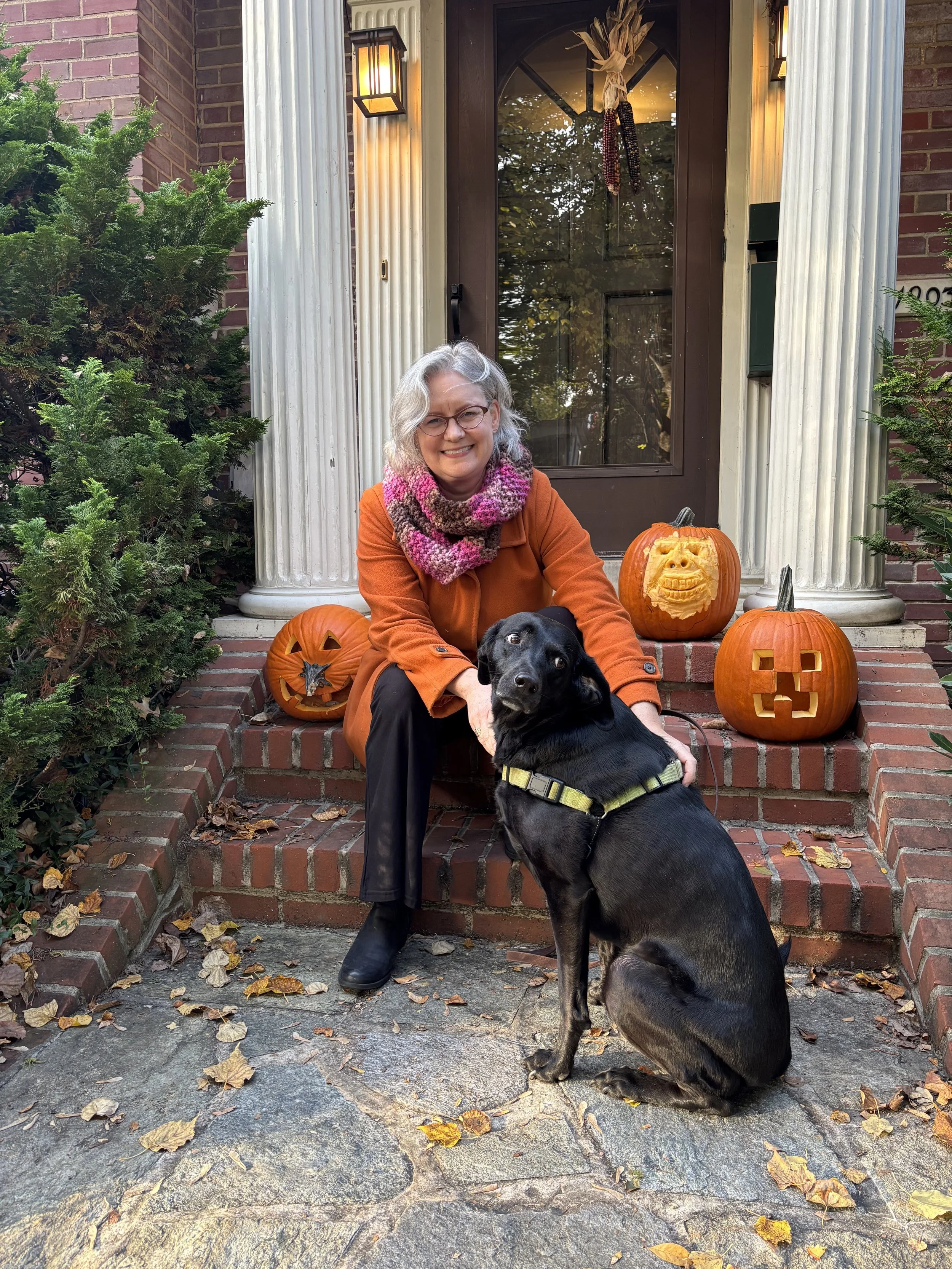
I encourage you to try this sometime. If you notice shame or blame (including criticism) or a preoccupation with a situation, get curious. Is there pain underneath? Is there shame? Let’s not get scared by shame. Let’s bring it out from the shadows and see those spooky and scary shame feelings for what they often are: old stories and beliefs that are creeping into our present life without warning.
In real life, when the ghosts and goblins of shame and pain spook you, and you react, don’t get scared…love yourself. Yes, love yourself. Say something nice to yourself. Be gentle. Just like when I went over to Olive, patted her and said, “It’s okay. You’re okay. Let’s go home together.” I turned toward home and she followed me, loping along, calmer with each step.